Quick answer
The campaign contains 30 handcrafted levels in the current reference. The best route is not to memorise every answer; it is to learn the communication loop early, then use the level and module references to anticipate when memory, audio, Braille, and Chaos pressure enter the run.
📚 Progression cue: practise the communication loop first, then add one harder module type at a time.
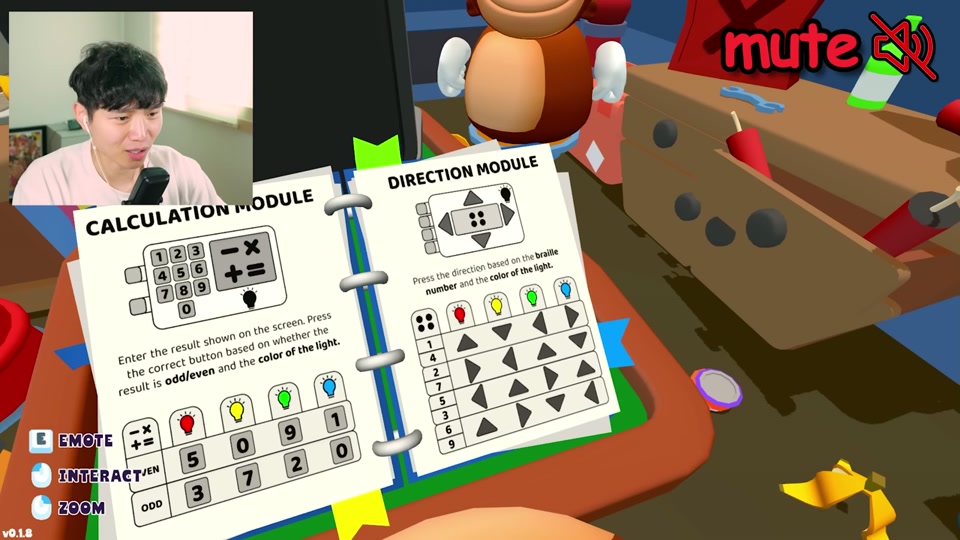
Progression by training band
| Levels | Team focus | Preparation |
|---|---|---|
| 1–5 | Basic visual and table calls | Cable, Calculator, Direction, Symbol |
| 6–10 | Faster transitions | Piano, Soundboard, Switch, Alarm introduction |
| 11–17 | Sustained Chaos monitoring | Alarm, Pressure, Slider and role handoffs |
| 18–24 | Hard visual and memory work | Maze, Monkey-Says, late-stage orientation |
| 25–30 | Full-team consistency | Rehearse hazard priority and recovery calls |
The bands are a planning aid, not a replacement for the live level panel. Check the Level Lookup before each session for the current module list and Chaos load.
How to use the planner
Open a level in the lookup tool, assign one player to the primary visual read, and decide which player will monitor a Chaos module if it appears. After the run, record the first unclear callout rather than only the final mistake. That note tells you whether to revisit roles, a module page, or the timing pressure of Endless.
A three-session training route
- Session one: practise the early visual modules and agree on a fixed callout order.
- Session two: combine one normal module with Alarm, Pressure, or Slider and keep a dedicated hazard monitor.
- Session three: practise Maze, Morse, or Monkey-Says in isolation, then use Level Lookup to place them beside the expected late-game load.
After each session, keep one concrete correction: a missing position, a skipped stage, or an unclear final caller. That correction is more useful than trying to memorise every level row before the team can communicate the current state.
Late-game preparation
Maze asks for orientation and Braille interpretation; Monkey-Says asks the team to retain the full sequence; Morse asks for disciplined listening. Practise each module in isolation before combining them with Alarm or Pressure. A late level is usually lost because the team changes vocabulary under pressure, not because one rule is impossible.